

Why Some Professionals Grow Faster Than Others
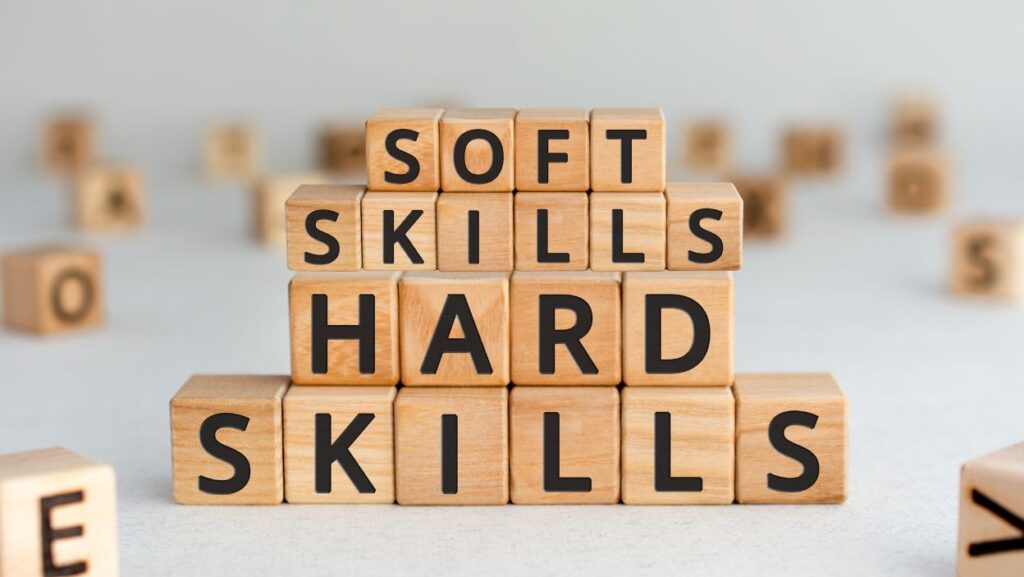
Have you ever wondered why some professionals grow quickly while others struggle—even when they have the same qualifications? This happens because career success depends on more than just technical ability. The answer often lies in understanding the balance between soft skills vs hard skills, because both are essential for true career success.
Think of them like the two wheels of a bicycle: one wheel gives you direction, the other gives you stability. Without both, moving forward becomes difficult.
You need a combination of soft skills and hard skills to grow confidently and consistently.
Think of it like travelling on a bike:
- One wheel is hard skills
- One wheel is soft skills
You can move only when both wheels work together.
Let’s explore why this balance matters and how you can develop it.
What Are Hard Skills?
Hard skills are the technical abilities you can learn through training, education, or practice. These skills are easy to measure because someone can test you on them.
Examples of Hard Skills
- Coding in Python or Java
- Accounting and preparing balance sheets
- Data analytics
- Operating machinery
- Graphic design
How Hard Skills Are Measured
Hard skills can be tested.
For example:
- You either know how to code or you don’t.
- You can either design a brochure or you can’t.
- You either understand accounting formulas or you don’t.
That’s why companies use tests, certifications, or practical assignments to check these abilities.
Story:
Imagine a doctor. No matter how kind or polite they are, they must know anatomy, medical tools, and treatments. Without these hard skills, the job can’t even begin.
What Are Soft Skills?
Soft skills are the people skills that show how you behave, communicate, and interact with others. These skills help you work with teams, handle problems, and stay calm under pressure.
Examples of Soft Skills
- Communication
- Leadership
- Emotional intelligence
- Problem-solving
- Adaptability
Why Soft Skills Are Harder to Measure
There is no exam that tells if you are a good listener or a good leader. Soft skills are seen through your actions, not your certificates.
Example:
A team prefers a calm leader who listens to everyone rather than someone who only gives orders.
Soft Skills vs Hard Skills: Key Differences
Understanding soft skills vs hard skills helps you see how each supports your career differently.
1. Tangibility
- Hard skills: Tangible and measurable
- Soft skills: Intangible and demonstrated through behavior
2. Learning Style
- Hard skills: Taught in classrooms or online
- Soft skills: Developed through practice and life experiences
3. Assessment
- Hard skills: Exams, tests, certifications
- Soft skills: Feedback, observation, workplace behavior
The Role of Hard Skills in Career Success
Hard skills are your entry ticket into any profession.
Without the right knowledge, you may not even get shortlisted for an interview.
Examples:
- A programmer must know coding languages.
- An accountant must know financial rules.
- A pilot must know how to fly an aircraft.
Hard skills prove you can do the technical work.
The Role of Soft Skills in Career Success
Soft skills help you grow faster, lead teams, and become someone people trust.
Examples:
- A talented coder who cannot communicate struggles in team projects.
- A salesperson with strong listening skills builds better customer relationships.
- A manager with empathy creates a happier workplace.
This is why most leaders are not just skilled—they are emotionally intelligent and good communicators.
Soft Skills vs Hard Skills in the Workplace
When you compare soft skills vs hard skills, you’ll see both play different but important roles.
Soft Skills at Work
- Building trust with teammates
- Handling conflicts calmly
- Motivating others
- Managing time effectively
Hard Skills at Work
- Completing technical tasks
- Increasing productivity
- Delivering accurate results
- Using tools and software correctly
Both skill sets complement each other.
Why Finding the Right Balance Matters
Imagine a chef who knows every recipe perfectly (hard skill) but cannot handle stress or work with a team (soft skill).
Would the kitchen run smoothly?
Probably not.
Success is a combination of:
✔ Technical expertise
✔ Emotional intelligence
✔ Good communication
✔ Ability to work with others
The debate of soft skills vs hard skills is not about choosing one. It’s about learning how both contribute to personal and professional success.
How Employers Value Soft Skills and Hard Skills
Modern recruiters prefer hybrid professionals—people who bring both skill sets.
- Hard skills help you get hired.
- Soft skills help you get promoted.
Studies show companies want employees who can think, solve problems, communicate, and adapt.
How to Develop Hard Skills
Here are simple ways to grow your hard skills:
- Take online courses from Coursera, Udemy, or LinkedIn Learning.
- Pursue diplomas, degrees, or technical training.
- Work on real-life projects.
- Get certifications to validate your expertise.
How to Develop Soft Skills
Soft skills take time, practice, and patience.
Here’s how to improve them:
- Practice active listening in conversations.
- Ask friends or colleagues for feedback.
- Join community groups, clubs, or volunteer programs.
- Attend workshops on communication or leadership.
- Observe good leaders and learn from them.
Small story:
A junior employee once struggled with presentations. After joining a small speaking club, he practiced weekly. Within months, he became one of the best presenters in his team.
How to Balance Soft Skills vs Hard Skills for Career Growth
Use a combination of both:
On Your Resume
- Hard skills → certifications, tools, languages
- Soft skills → teamwork, leadership roles, achievements
In Interviews
Share real examples where you used:
- Hard skills → solving a technical problem
- Soft skills → resolving a conflict or helping a team
At Work
- Keep learning new tools
- Communicate clearly
- Be adaptable
- Seek feedback
Balance leads to growth.
Common Mistakes People Make
- Thinking technical knowledge is enough
- Ignoring soft skills like communication
- Focusing only on certificates and not behavior
- Believing one skill type is more important than the other
Conclusion: Build Both Wheels of Your Career
At the end of the day, your success depends not only on what you know but how you use what you know. Hard skills may get you into the room, but soft skills decide how far you rise. The best professionals master both—and that is the real secret to building a strong and successful career.